
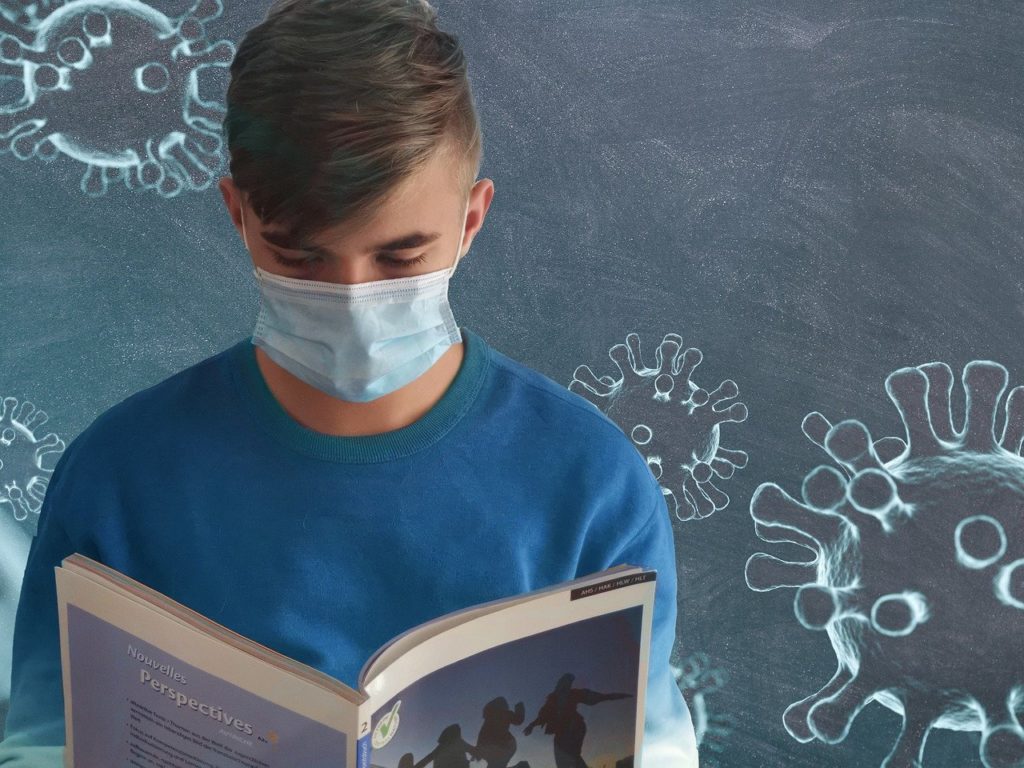
There are many factors to consider as WCPS braces for Cooper’s reopening decision
We could have written a simple, hard news story about Monday’s regular meeting of the Wayne County Board of Education.
If we were to write that report, it could be summarized in one simple, yet ironically still complicated, statement — nobody knows for sure what to do about school this fall; school officials are trying to put together a plan based on what ifs, maybes and maybe nots; and the state isn’t being much help.
But we think it is time to lead a discussion.
Wayne County Public Schools have been trying to have that dialogue — with several attempts at surveys and conversations with community stakeholders.
The task of reaching families and teachers is enormous — and the looming deadlines are daunting — but they are trying to get your feedback.
And while we might have our disagreements with the district’s leadership to-date, we cannot emphasize enough that this is no small endeavor.
The bottom line is that not knowing what is happening with a little more than three weeks until the first schools are about to go back in session is not a failing of local administrative offices.
No one, and we repeat, no one, really has a definitive answer about what they are doing — only theories.
And that includes Gov. Roy Cooper and the Department of Public Instruction.
Don’t believe all the rosy predictions and fanfare about how well remote learning went.
It didn’t.
A lot of people made a good faith effort, but the majority of districts — and parents — weren’t ready, and it showed.
Call it doing the best with the hand you were dealt.
So, let’s go over what we know so far.
At Monday’s meeting, Tamara Berman-Ishee, assistant superintendent for teaching and learning, reported to the board that a task force made up 40 people representing the district, the community, parents and teachers met this past week to talk about what to do if Plan B is the reopening the governor chooses.
Plan B is the hybrid model, which basically means that students would return to school, but under 50 percent capacity and strict social distancing measures.
There are two possibilities along with that. Each student would be assigned a cohort — or group — and would attend school two days a week and learn remotely three days a week under one scenario (with Wednesdays left open for cleaning, tutoring or other needs) or alternate weeks of in-person and remote instruction under the other.
The other options — Plans A and C — are the absolutes — all out opening (back to normal operations) or all out remote learning.
Most people think Cooper is going to go for the hybrid.
A district can choose to implement its own plan, but it has to become more cautious, not less.
So, if Cooper chooses Plan B, a district can go to Plan C (remote learning), but not full reopening.
Get it? We know it is confusing.
Ishee told the board that the task force met for a long time and talked about all sorts of possibilities, problems and potential solutions.
The consensus, she said, is that this is a really serious, really difficult plan to manage, with potential expenses and pitfalls all along the way.
She is right.
Why?
Let’s look at Plan B.
•
Plan B is a logistical nightmare.
Shifts of students mean shifts of teachers — and the need to get one set of students to school and out, sterilize, and then get another set of students in.
You see, social distancing requirements mean fewer kids on a bus and in a classroom. That might not be as much of a challenge in the smaller schools, but what about the larger ones? And what do you do about changing classes safely and making schedules work at the high school level?
We would need more teachers, more bus trips, more custodians and it would really throw a wrench into food service.
And this is going to be expensive.
So while we can argue that had money been used more efficiently, the schools would have had the funds to respond more appropriately to this challenge, that is not our reality.
There will be federal and state dollars, but will they get to us in time and at the appropriate levels?
If we base that analysis on how long we have had to wait for an answer from the state about what school will look like this fall, we better not count any chickens before they have hatched.
Translated: It is going to be a long wait and a bureaucratic moving target at best.
And those are just a few of the challenges for the district operations.
Let’s talk about parents.
What are you going to do about those “remote learning” days or weeks? The state is saying that children in one family will be assigned to the same cohort, but what if there is an issue?
Who is going to do that remote learning or be there when your son or daughter is done with his or her school day if they have to make scheduling adjustments to adhere to capacity rules?
And we already know what kinds of issues communities like ours are having with daycare. Where are we going to put students who have nowhere to go because their parents are working?
And then there is the irony of cutting back capacities in schools while filling up daycares.
And what about the kids?
Many students who attend Wayne County Schools rely on food programs for breakfast and lunch, some have learning challenges that make disruption of routine a barrier and others do not have the access to help and resources to advance their studies on their own.
How do they deal with half-time in the classroom?
We already know remote learning has its challenges — and heck, routine for children is very important.
Can we create an educational program that works with the half-time plan, anticipate and smooth out the kinks … in three weeks?
•
So what about Plan C?
Why not go to remote learning, at least until we have a better capability to slow the spread and perhaps a vaccine?
The concerns about Plan C are obvious. We have been living with them for the last four months.
We do not have a viable remote learning plan, not really.
There was a yeoman’s effort on the part of the teachers to meet the needs of their students, and some coaching and support from the central office, but no one was ready, and there were children who lost valuable education because of that.
And if we are not prepared again, they will get even further behind.
We are not ready for remote learning now either, but at least we have the lessons learned so far. Ishee said as much during the board meeting — that Central Office has had months to plan for remote learning, as opposed to the few weeks they have spent on Plan B.
•
So, what does this all mean?
Board member Pat Burden was absolutely right. No matter which option is chosen, no matter how much planning is done and no matter how many opinions are sought, 50 percent of the county will be happy with the decision and 50 percent will not.
No matter how you feel about COVID-19, and even if you think that it is being blown out of proportion and it is time to get back to normal life, there are still a lot of unknowns.
We still are not sure what the danger really is. Spikes, infections, hospitalizations and deaths, all those statistics are important.
We don’t know what will happen if we go full bore — or who might get hurt in the process.
And we are running out of time to make sure we have done everything we can to minimize the risks.
So maybe the root of the problem is time.
We know masks and social distancing help, but we cannot say for sure what will happen when we try to make an elementary school full of children follow those rules.
And then there are the teenagers — you know the ones who know everything and think their parents, well, don’t know anything.
We know that putting some teachers and students with health conditions in an environment that is risky is just that — a serious gamble.
And we don’t know how to make sure that a school is sanitized properly every 24 hours.
Think about that for a moment. When schools were shuttered in March, teachers were told to stay home because of safety concerns.
Now we’re going to properly sanitize every four hours and put hundreds of children into the mix? And let’s pause to think about the melee in the hallways that occurs every time a bell rings.
But there are some things we already know.
Schools are petri dishes anyway.
How often do your children bring home illnesses?
How many times have you heard about schools having to close because of a flu outbreak?
We know COVID-19 can be very serious and that people die.
We also know that there is no vaccine, not yet anyway, to minimize the risk. And we know, or at least remain cautiously optimistic, that one is coming soon.
There are treatments that have reduced death, but no one option that is definitive.
And yes, there are people flooding into local stores and to the beaches.
But comparing adults making a decision to pack Walmart to forcing children and teachers into an unknown is not valid.
And it is not a justification. Not this time.
•
There are reasons to put children back in school.
There are children at home who cannot distance learn. They don’t have access to equipment or the internet. They missed out during the last few months of school — and it mattered.
There are others who are in bad situations at home. School is their safe place — and their teachers are their advocates.
They eat two meals a day there, and they get away from bad neighborhoods and bad influences.
That matters, too.
And there are parents who cannot take off work to stay home to teach their children or who cannot help them because their education was limited.
Their challenges matter, too.
And then there is the other concern, the one we don’t like to talk about out loud. Children from low-income families or neighborhoods, those who are most at-risk, they often have health problems — diabetes, severe asthma, sickle cell and rare allergies — that make them more vulnerable to COVID-19.
Those considerations are important, too.
•
So we have laid out the dilemma and covered some of the arguments on both sides.
Here is what we think — and what we hope you will talk about.
We think it is time for our country and our county to get back to normal — and we know that this shutdown and the ups and downs of staggered re-openings have taken their toll on our communities.
We know some of you have suffered and have lost a lot.
But we think we are not ready to go back to school, not yet, and certainly not in a little more than three weeks. Remember, Goldsboro High School, Wayne School of Engineering and other “non-traditional” schools are set to return Aug. 6.
Waiting a bit longer might not be the best answer or the one any of us want to hear. We all want to go back to how we were before. We miss our families, our friends and our neighbors.
We miss being able to shake a hand, to hug someone or simply to breathe without sucking in a piece of fabric.
We want to think what we sacrificed was justified, but we aren’t sure whom to trust.
And we would be remiss if we did not acknowledge that part of the reason we have so many questions and so many doubts about what should happen next is because of how all of this has been handled.
We know the media has played a role and that hypocrisy and mixed messages have made us wonder whether we are hearing the whole story.
That made us wonder about experts, statistics and predictions, without taking into account that no one, not even the scientists, could possibly know all the answers or say with complete certainty what to expect or what to do. They were learning, too, and analyzing raw data moment to moment.
We know that there is politics involved — big time. So every warning, every piece of advice came under scrutiny for ulterior motive. That slowed us down again.
We know the division that has been created and the battle lines that have been drawn have made this worse.
Had we been able to unite, to overlook differences, to support our leaders and to be there for each other, we might have tackled all of this differently.
We feel like we have already done our part and that we cannot let this virus paralyze us forever.
Americans hate to let anything beat us. It is what makes this country so great.
But we also have to think about each other, to be there for those who are vulnerable, who are most at-risk.
That is part of being an American, too. You know, that “united we stand” thing.
We don’t need the politicians to make that decision for us — or to tell us how to think, how to feel. Our moms and dads taught us about those values.
So here is what we think. (We want to know what you think and welcome the opportunity to publish a collection of your thoughts in the coming days, so comment here and on our Facebook page or email newoldnorth@gmail.com to participate.)
The right plan is to stay remote for a little while longer, to commit to getting our children back in the classroom as soon as it is possible, but to take the extra time to get there, to make sure we are ready.
We don’t think we should “wing it” or try an option and then adjust it as we go along.
When the governor announces his decision, which we expect today, we should commit here in Wayne County and get the plan in place. Opening day should be when we are ready, whether that is mid-August or early September, with the understanding that there will be a change when there is news about a vaccine or a treatment.
It is not what we want. But right now, it is what is safest.
Consider it an investment.
The delay does not have to be months.
We can be back in the classroom full-time soon.
But putting together a plan, committing to it, making sure the parts are in place to make it work and then trying it out to make sure it works, that is how we ensure we have done everything we can.
We might find out later that the precautions were excessive, that we could have gotten back in the saddle sooner.
But we will know that we put our community and our children first.
And that is what matters.




A loaded discussion

Fighting for their lives


Goldsboro loses a giant
“I’m a flippin’ hurricane!”
Public Notices — March 29, 2026

Belting it out
Legendary
In her Nana’s image